Crafting a 1950s Porsche Poster
Transitioning between design eras requires more than just swapping out fonts—it demands a deep understanding of historical tools, spatial hierarchy, and technical restraint.
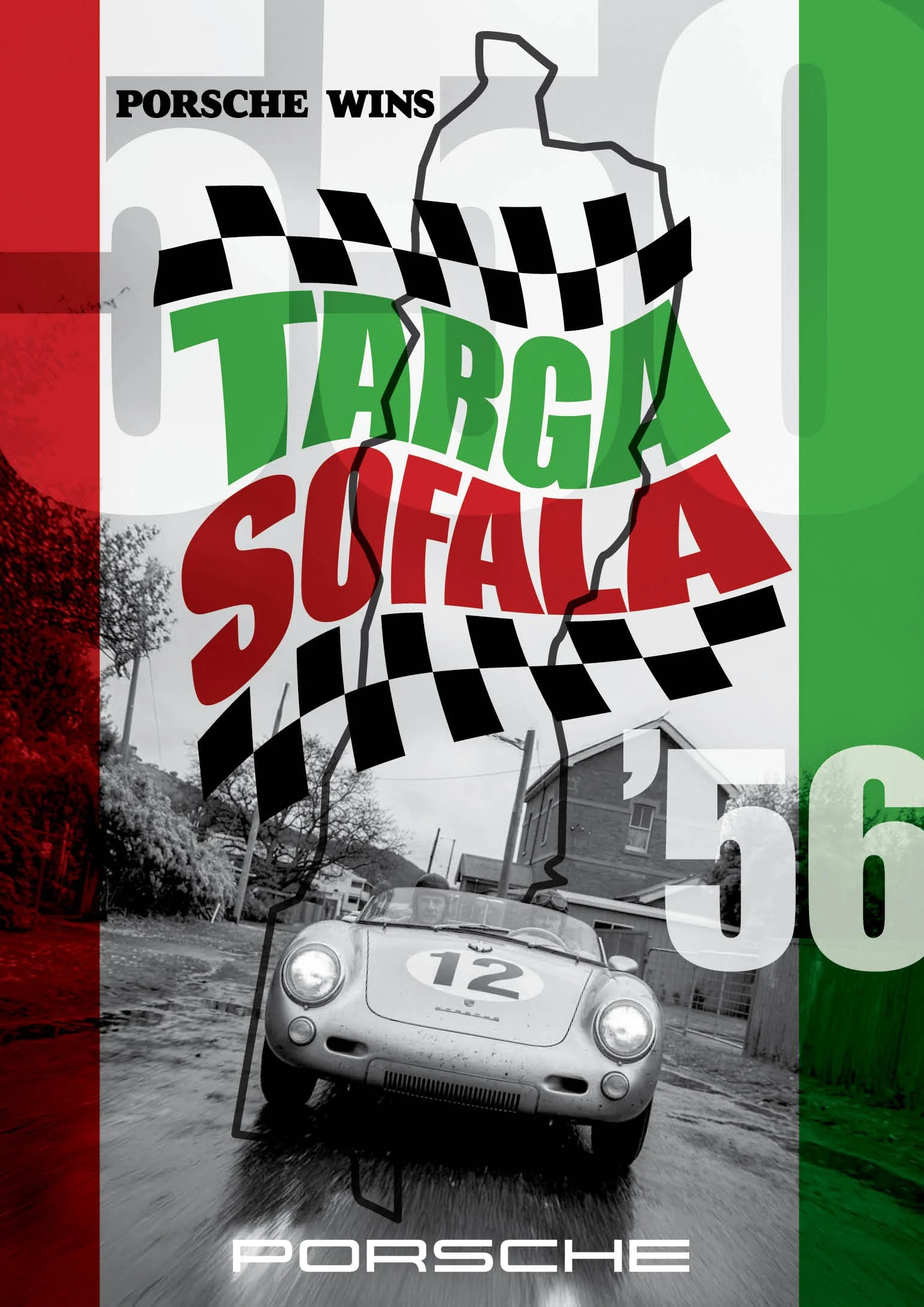
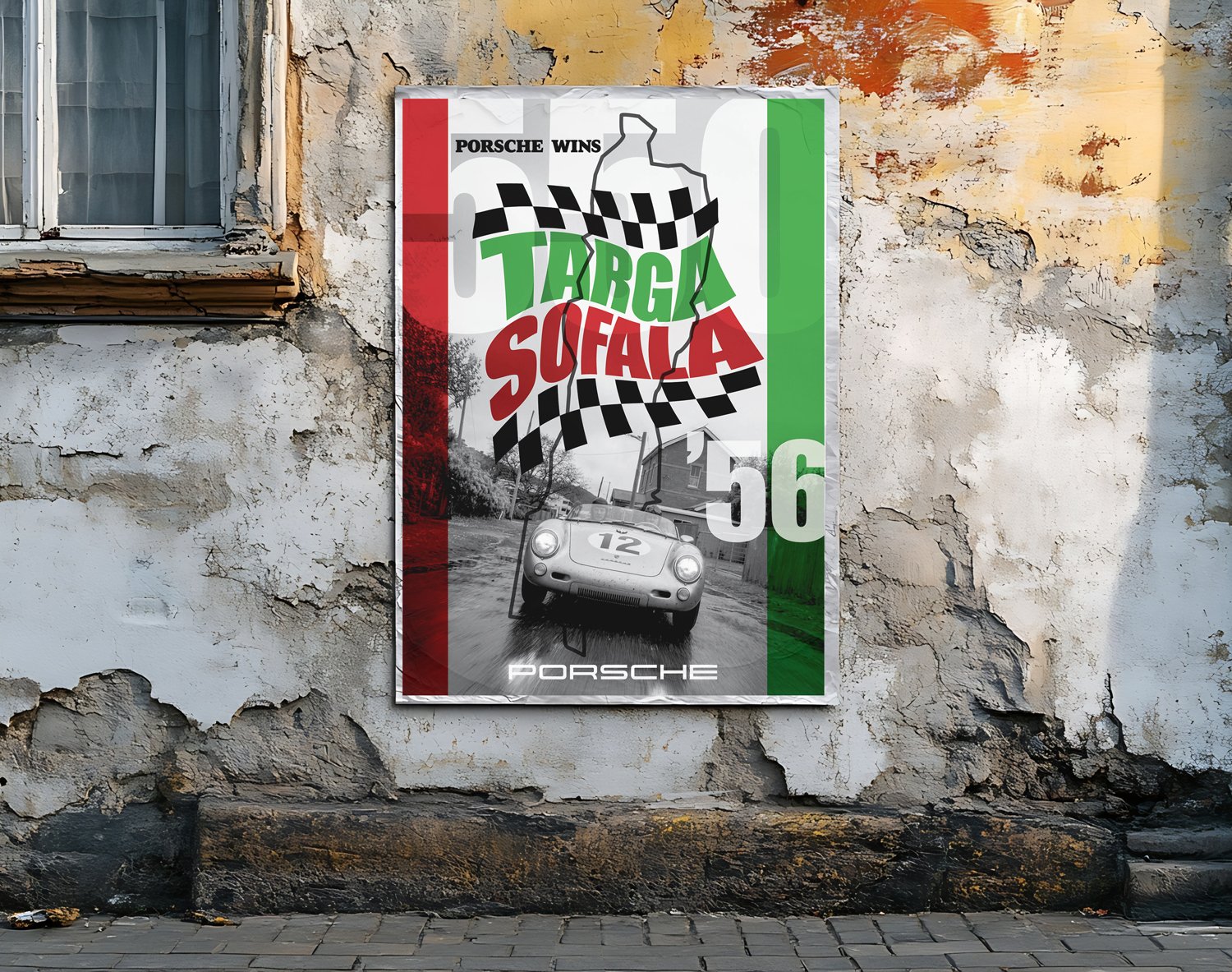
Following Part One: The Royal National Park Hillclimb, an exploration of '80s-inspired distressed textures and heavy visual noise, Part Two: Targa Sofala, 1956 shifts the narrative entirely toward mid-century precision, visual clarity, and elegance.
Deconstructing Analog Design
In 1956, Porsche posters and graphic design were strictly manual. No undo buttons, vector software, or digital layers existed. Masters of mid-century print relied on mechanical paste-ups, hand-cut rubylith film, darkroom photo manipulation, and exacting drafting techniques. To create a piece that feels genuinely rooted in the 1950s, Part Two references these tactile, hand-executed methods within a modern framework:
Monochromatic Depth: Mimicking analog darkroom isolation, the poster combines monochrome photography with sharp, drafted map outlines. Balancing the photo contrast against clean lines echoes the careful hand-masking techniques of vintage print shops.
A Restrained Colour Palette: Referencing early Targa Florio racing collateral, the poster uses a tight red-and-green palette. In the 1950s, spot colours were chosen deliberately to manage multi-pass press runs; limiting the palette here honours that functional, print-first restraint.
Layer Composition: In an era before digital blending modes, designers had to place every visual layer, typography, topographic lines, dates, and imagery deliberately to avoid visual interference. The layout unifies these separate elements so they feel like a singular, hand-assembled mechanical paste-up.
Why Versatility Matters in Graphic Design
Every era speaks a distinct visual language dictated by the tools of its time. Capturing the authentic spirit of an epoch, whether referencing handcrafted '50s typography or raw '80s motorsport textures, requires balancing historical craftsmanship with contemporary technical execution.
Part Three will push the exploration further into another decade of automotive visual culture.
Need a Strategic Design Partner for Your Next Project?
Whether you are launching a brand identity, building a series of high-end print posters, or looking for a design partner who respects both historical technique and modern execution, let's talk.
Explore the full series portfolio on the website, or reach out directly to discuss your next creative campaign.